I+D in biomechanics
innovation experts

What do we do?
We help you develop customized biomechanical technologies
UMANA is a healthcare center specialized in applied biomechanical research.
Since the start of our activity in 2006, we have stood out by generating knowledge and transferring it to society through new technologies and services. All our clinical, sports, and preventive activities, as well as our footwear and human design laboratories, operate with proprietary technologies developed within our R&D areas.
We believe in innovation as a source of growth, and that is why we help you explore new knowledge and develop tailor-made biomechanical technologies that provide a competitive advantage for your company, your product, or the services you offer to your clients.
As specialists in biomechanics, we participate in the development of innovative and specialized technologies, contributing scientific and technological expertise, developing algorithms and systems, and validating measurement accuracy.
Technology-Based Company
Rated since 2006Biomechanics Healthcare Center
Authorized since 2008Collaborator of Technology Centers
Consultants since 2010Applied Biomechanics Research Center
+20 years of research


why are we a great technology partner ?
UMANA ® | BIOMECHANICS
fusion of areas and sciences
area merging
biodiversity umana
a perfect ecosystem
Bioengineering
Leaders in biomechanical engineering
All our technology development projects are led by the co-founders of UMANA®, both senior engineers specializing in biomechanics and with extensive research experience of over 20 years in the field of bioengineering.
Engineering & Design
New technologies and 3D CAD design
We have a senior team of experienced industrial engineers specializing in ad-hoc technological development projects, creative design techniques, 3D CAD and FEM analysis, and technological manufacturing and industrialization processes.
Medicine
Musculoskeletal health specialists
The development of biomechanical analysis technologies is closely linked to the medical foundations of the musculoskeletal system. Therefore, our team includes medical graduates specializing in rehabilitation, traumatology, and occupational medicine.
Sciences of Physical Activity and Sport
Movement professionals
We understand body movement as synonymous with physical activity, and we integrate university graduates in Physical Activity and Sports Sciences as a fundamental part of our human team for R&D projects.
Physiotherapy and Osteopathy
Physiology experts
Our team of physiotherapists and osteopaths, with their deep understanding of people’s functional and psychomotor abilities, is a key component in all the R&D projects we undertake in the field of biomechanics.
Chiropody
Experts in posture and body dynamics
Our ecosystem of professionals is complemented by podiatry graduates. Their knowledge of the foot and its influence on posture and movement patterns often proves essential in our biomechanical research projects.
UMANA ® | TECHNOLOGY DEVELOPMENT
360º biomechanical knowledge
360º knowledge
At UMANA®, we offer comprehensive biomechanical expertise for the development of tailored technologies. We design advanced systems for measuring all types of biometric parameters (3D body position, muscle strength and power, skin pressure and temperature, and even neural activity) and also numerical simulation models for predicting these parameters in controlled environments and conditions. Furthermore, we transform this data into actionable insights, and that insights into better decision-making. Because our innovations don’t just measure numbers; they provide clear and reliable interpretations of their implications for people’s health, comfort, and performance.

technology development | 3D movement
The measurement of human movement parameters (range, coordination, and speed) is used to assess both general capacity and specific skills in any individual.
Analyzing human movement is essential in medical rehabilitation processes, as well as in sports training and performance optimization, and in the assessment of risks in occupational activities.
3D analysis of swimming technique

Technology development | Muscle recording
The graphical recording of muscle contraction (its shape, intensity, and duration) is used to determine the level of effort required by any activity, as well as to assess the effectiveness of neuromuscular recruitment.
This information supports the diagnosis and monitoring of neurological and musculoskeletal disorders, and is also essential for analyzing the physical load of work tasks and the coordination of sports movements.
work environment effort analysis
work environment effort analysis

technology development | force measurement
isometric, isokinetic and isoinertial
The measurement of muscle strength (isometric, isokinetic, and isoinertial) is used to determine the maximum effort capacity of any individual across different movements and situations (static and dynamic).
Understanding strength is crucial in physiotherapy for injury rehabilitation and identifying imbalances, helps predict the risk of diseases and relapses, and allows the evaluation of sports performance across multiple disciplines (rowing, cycling, tennis, athletics, etc.).
UROW TECHNOLOGY | C.R. Orio & Umana ↑
strength analysis in rowing sports

technology development | power measurement
force and speed
Power is the ability of a muscle to generate force quickly. Its measurement allows the evaluation of the explosiveness of different body movements, as well as the analysis of specific joint motions.
It is of great interest in physiotherapy for monitoring rehabilitation processes, in sports medicine for diagnosing deficits and functional asymmetries, and in training to optimize performance in pedaling, running, jumping, and throwing.
muscle strength analysis in rehabilitation
muscle strength analysis in rehabilitation

Technology development | Numerical simulation
biomechanical models
The use of computational biomechanical models allows us to predict the effects of any product on the human body without the need to manufacture preliminary prototypes or test them in the laboratory.
Their development is useful for anticipating contact comfort in a seat, thermal conditions inside footwear, or an athlete’s movement on any machine. Their applications are generally focused on ergonomic product design.
biothermal analysis of the foot
biothermal analysis of the foot
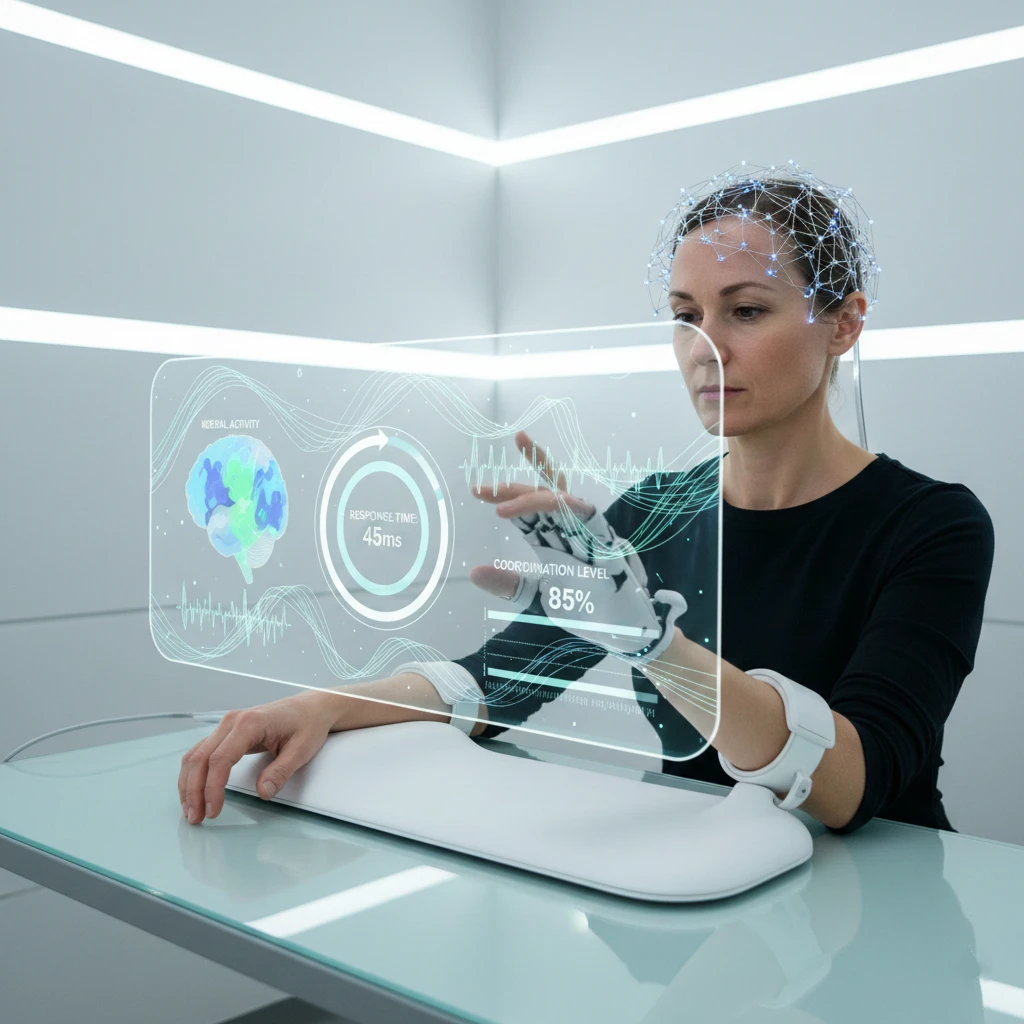
Technology development | Neural recording
brain activity
The study of brain waves (morphology, amplitude, and frequency) is used to understand the brain’s electrical activity in different states (sleep, relaxation, alertness, concentration…).
Its application is useful for diagnosis (encephalopathies, sleep disorders, trauma, strokes…), and also in rehabilitation to assess brain function and cognitive decline, monitor the progression of neurological diseases, and develop neural interface prosthetics.
neural signal analysis in rehabilitation
neural signal analysis in rehabilitation

technology development | pressure analysis
plantar and epithelial comfort
The measurement of contact pressures on the body provides valuable information to evaluate the gait patterns of any individual, as well as to assess comfort levels and the risk of epithelial injury in different situations.
Pressure measurement technologies can be used clinically to study gait and balance, but they also extend to product development, enabling real-time footwear monitoring and the optimization of fitted garment design (particularly relevant for athletes, diabetic patients, individuals with reduced mobility, and prosthetics…)
in-shoe pressure analysis in diabetics
in-shoe pressure analysis in diabetics

Technology development | Thermal recording
The measurement of body surface temperature allows the creation of thermal skin maps and the identification of heat patterns associated with physiological, vascular, and neural activity, making it useful for detecting health issues as well as identifying the effects of poorly designed products on the body.
Technologies for measuring epithelial temperature have become established as complementary techniques in the early diagnosis and monitoring of vascular and neurological patients. They are also useful for real-time monitoring of sports and occupational activities, and for the development of specialized product testing technologies.
THERMSOLE TECHNOLOGY | Footgel & Umana →
in-shoe pressure analysis in diabetics