Technology uXhoes
Science at Our Feet

What do we do?
At UMANA Footwear Lab, we measure the biomechanical performance of footwear and help manufacturers improve their designs and scientifically demonstrate their benefits.
We collaborate directly with our clients’ technical teams, providing expertise and improvements from the early design stages through to the sales process.
Our comfort and barefoot studies allow us to anticipate how footwear performs in real-world conditions, and to understand its impact on the foot, movement, and user satisfaction.
Technology-Based Company
Qualified since 2006Biomechanics Healthcare Center
Authorized since 2008Official Biomechanics Laboratory TC Novex
Partner since 2018Independent Footwear Validation Center
20+ Years of Research
uXhoes technology

Our uXhoes technology enables us to perform biomechanical assessments of barefoot footwear, evaluating how effectively footwear respects the natural biomechanics of the foot, including posture, plantar loading, and gait patterns.
Our uXhoes technology enables us to perform biomechanical assessments of footwear comfort and efficiency, evaluating how effectively footwear reduces the loads transmitted to the user’s feet, legs, and back.

footwear lab services
Improves user satisfaction
At UMANA Footwear Lab, we provide four specialized services that deliver significant benefits throughout the entire footwear development process:
- Preliminary design
- Prototype assessment
- Optimized redesign
- Independent biomechanical certification
In addition, our biomechanical certification reports and QR certification labels provide significant value for marketing, product positioning, and commercial communication.

leading figures in Spain
At UMANA®, we specialize in footwear biomechanics. Thanks to our expertise and research, we have become the national benchmark in the sector, serving as established speakers at the National Congress of Podiatry and other podiatry congresses and scientific symposia.
- 55th National Podiatry Congress | Zaragoza 2026
- 4th National Freedom of Movement Congress | Alicante 2026
- 54th National Podiatry Congress | Las Palmas 2025
- 3rd National Freedom of Movement Congress | Alicante 2025
- 53rd National Podiatry Congress | Cartagena 2024
- 2nd National Freedom of Movement Congress | Alicante 2024
- 52nd National Podiatry Congress | Barcelona 2023
- 26th Scientific Podiatry Conference | Barcelona 2022












what makes uXhoes barefoot different?
UMANA ® | uXHOES
Barefoot Footwear Scientific certification
Barefoot Certification
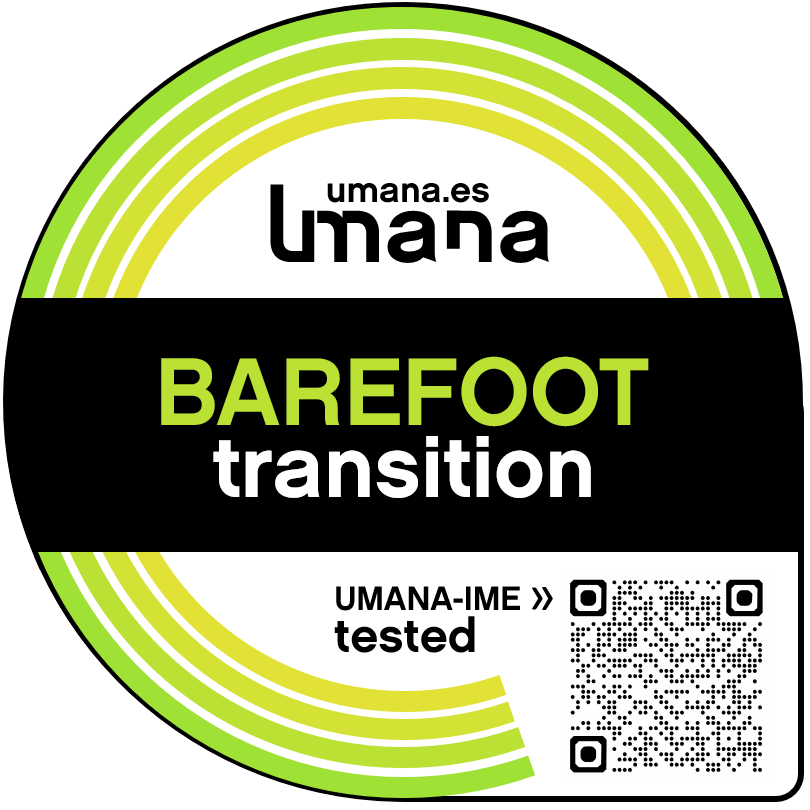
BAREFOOT | transition
This is the ideal footwear for users making the transition to barefoot walking. It features an extended UMANA minimalist index of 70–80%, a drop of ≤10mm, a sole thickness of ≤18mm, and lasts that are not as narrow as those found in conventional footwear.
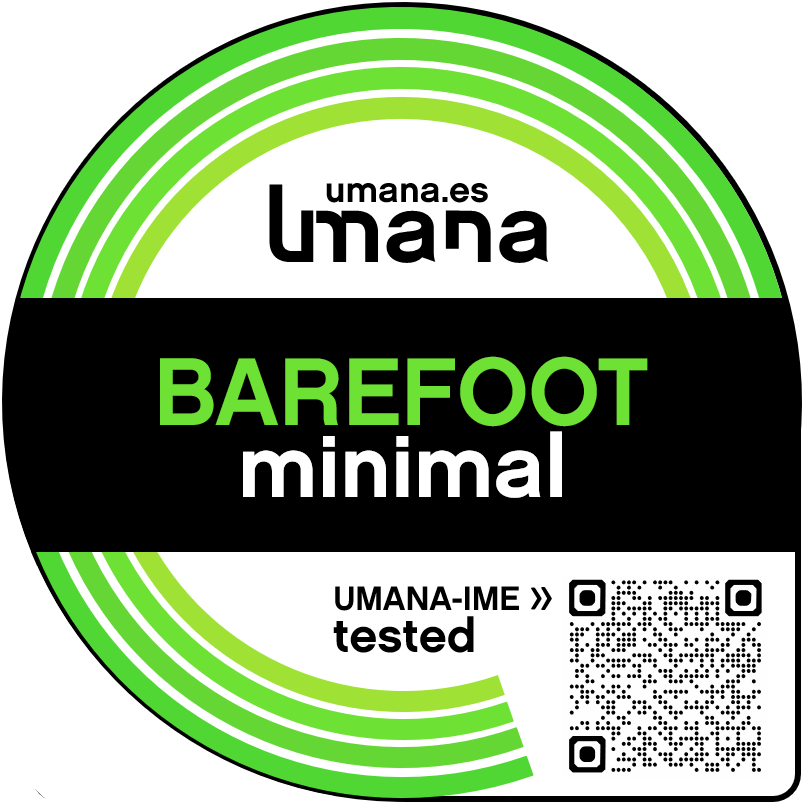
BAREFOOT | minimal
This is the type of barefoot footwear most commonly worn for everyday use. It features an extended UMANA minimalist index of 80–90%, a drop of ≤5mm, a sole thickness of ≤14mm, and wide, spacious lasts in the toe area.
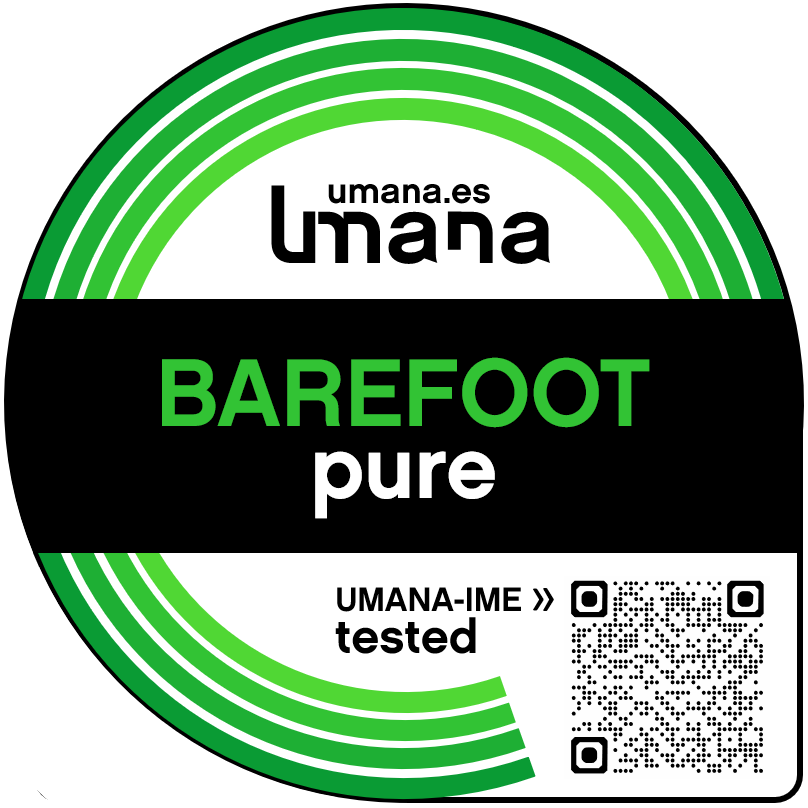
BAREFOOT | pure
This represents the purest form of barefoot footwear, offering the sensation of walking unshod. It features an extended UMANA minimalist index of 90–100%, a drop of ≤1mm, a sole thickness of ≤10mm, wide and anatomical lasts in the toe area.
UMANA ® | uXHOES
standard with over 1 million scanned feet
analysis with +1M feet

barefoot assessment | UMANA-IME:2025.11.v2
Private and Independent Certification
Our uXhoes technology enables us to perform biomechanical assessments of barefoot footwear, evaluating how effectively a shoe preserves natural foot function, gait mechanics, posture, and ground interaction.
Over more than 10 years, we have developed the UMANA-IME:2025.11.v2 laboratory protocol, which integrates 15 biomechanical tests to scientifically assess the barefoot performance of footwear (%IME).Using the %IME Index, footwear is classified as Barefoot Transition, Barefoot Minimal, or Barefoot Pure, and a biomechanical certification report together with a QR certification label is issued for commercial use.
The UMANA-IME Barefoot Certification is a private and independent certification issued in accordance with the UMANA-IME:2025.11.v2 Protocol. (+ info)
In addition, our assessments identify footwear design aspects that can be improved to optimize the barefoot performance of future product versions.
scientific basis
"based on 10+ R&D projects and 50 international scientific references in biomechanics."
global database
”created with +1 million 3D foot scans and dynamic pedigraphs from users worldwide.”
multifactorial
”15 biomechanical tests to evaluate all the design parameters that influence barefoot performance”
high precision
”it combines 3D geometric evaluation systems and footwear biomechanical analysis equipment.”
% IME
”which provides an exclusive and scientific measure of the footwear's barefoot character.”
barefoot scale
”classify any barefoot model into the appropriate level: transition, minimal, or pure.”
certification
”displays, on a scale of 0 to 10, the rating for each of the 15 tested parameters, the %IME, and the overall score.”
QR Label
”it reflects the score obtained and includes a QR code that provides direct access to the certification report.”

Sole Geometry Test
Drop | Thickness | Toe Spring
The geometric design of the sole is one of the main factors influencing the barefoot character of footwear.
Drop, thickness, and toe spring directly affect the user’s posture, plantar sensitivity, and gait dynamics, modifying both walking and running patterns.
With the uXhoes sole geometry test, we are able to measure with precision down to tenths of a degree and millimeters the influence of the sole on the user’s natural movement patterns, in other words, its impact on the barefoot character of the footwear.

Last Fit Test
toe box anatomy | width | adjustment
Last fit is the most important parameter influencing the barefoot character of footwear.
Last width, toe box space, and closure systems directly affect the foot’s freedom of movement inside the shoe, altering both walking and running patterns.
With the uXhoes last fit test, we are able to measure the influence of the last on the user’s natural gait, using an anatomical reference built from over 1 million 3D foot scans and dynamic plantar pressure records from users worldwide.

Mechanical properties test
weight | flexion | torsion
The mechanical properties of footwear are also directly related to its barefoot character.
Weight, as well as resistance to bending and torsion, can compromise the natural movement of the foot inside the shoe, altering the user’s 3D lower-limb motion during walking and running.
With the uXhoes mechanical properties test, we are able to measure with precision down to tenths of a gram and kg·mm/° the mechanical influence of footwear on the user’s natural movement patterns, in other words, its correlation with barefoot performance.

Dynamic Performance Test
Control | Stability
The dynamic performance of footwear is fundamental in assessing its barefoot character.
Pronation control, dynamic stability systems, and fit precision directly influence gait biomechanics, altering the user’s dynamic movement patterns.
With the uXhoes dynamic performance test, we are able to rigorously measure the dynamic influence of footwear on the user’s natural movement patterns and assess its relationship with barefoot performance.
what makes uXhoes comfort different ?
UMANA ® | uXHOES
Comfort footwear Scientific Certification
Comfort certification
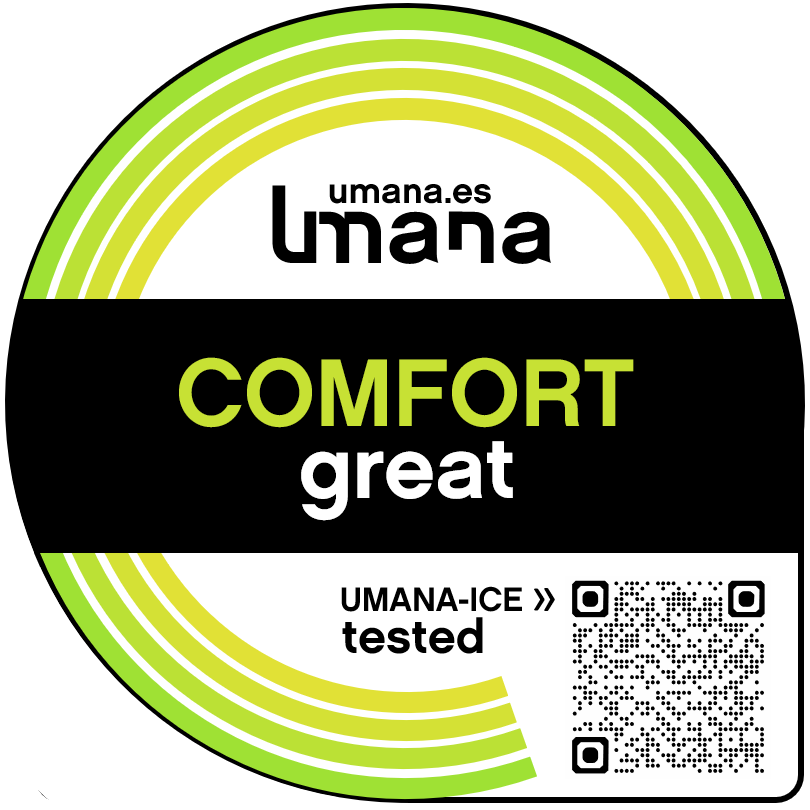
COMFORT | great
This footwear achieves a Great level of comfort and biomechanical efficiency (7–8/10). It helps reduce pressure on the feet, joints, and muscles, making it suitable for everyday use throughout the day or during the working day.
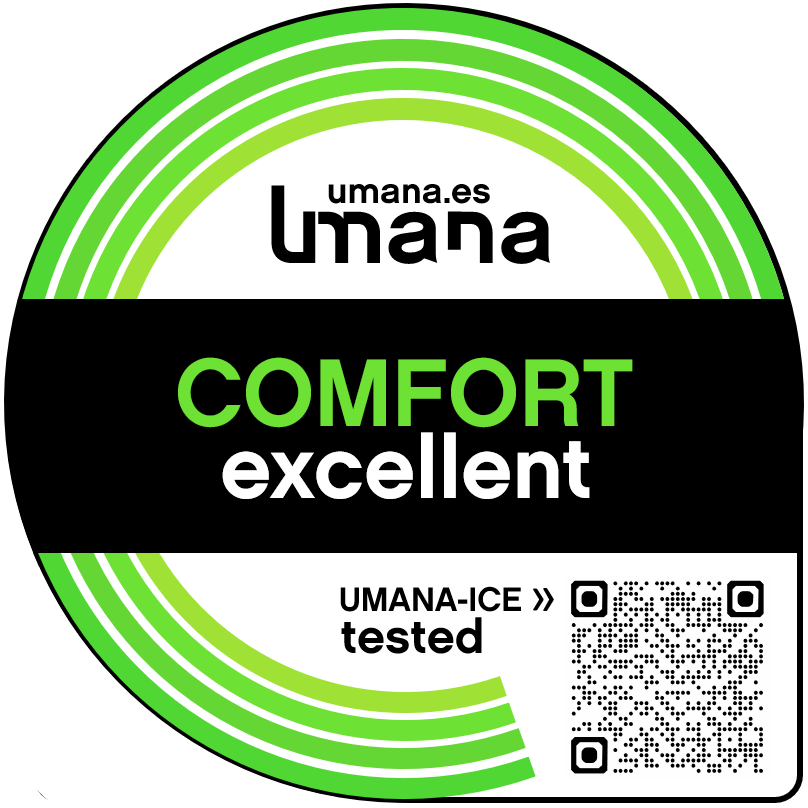
COMFORT | excellent
This footwear achieves an Excellent level of comfort and biomechanical efficiency (8–9/10). It helps reduce pressure on the feet, joints, and muscles and is recommended for intensive use, such as long-distance walking, hiking, or regular sports activities.
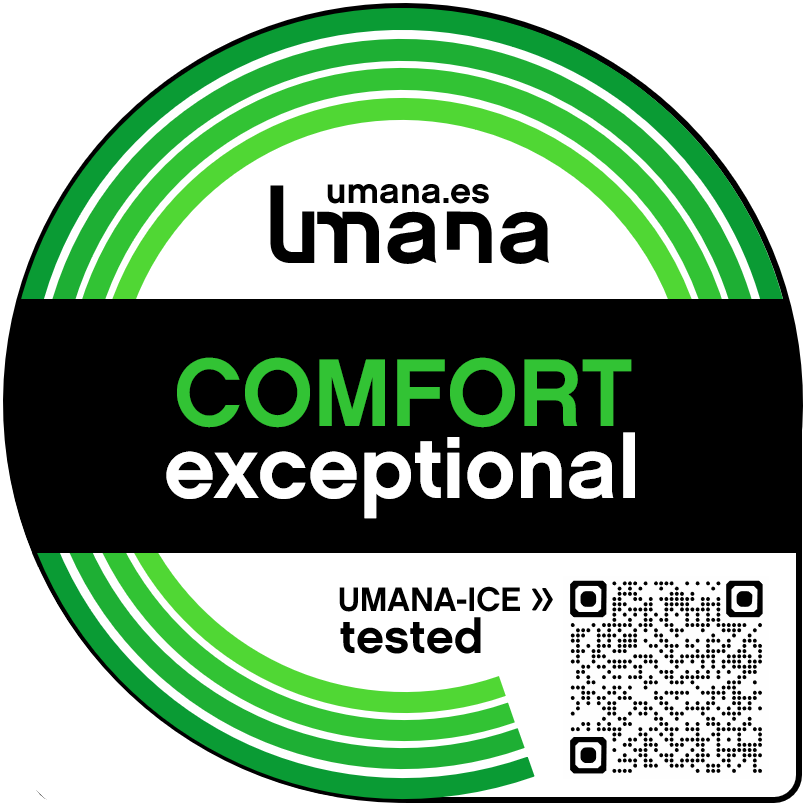
COMFORT | exceptional
This footwear achieves an Exceptional level of comfort and biomechanical efficiency (9–10/10). It minimizes pressure on the feet, joints, and muscles and is ideal for competitive sports or as complementary footwear for orthotic treatment.
UMANA ® | uXHOES
global gold standard in comfort certification
total Comfort Study

confort assessment | UMANA-ICE:2020.10.v2
Private and Independent Certification
Our uXhoes technology enables us to perform biomechanical assessments of footwear comfort and efficiency to evaluate how effectively footwear reduces the loads transmitted to the user’s feet, legs, and back.
Over the past 10 years, we have developed the rigorous UMANA-ICE:2020.10.v2 laboratory protocol, which integrates 8 biomechanical tests to scientifically assess the comfort and biomechanical efficiency of footwear (%ICE, Comfort and Efficiency Index). Through the ICE Index, footwear is classified according to its level of comfort and performance (Great, Excellent or Exceptional), and we issue a biomechanical certification report together with a QR certification label of significant commercial value.
The UMANA-ICE Comfort Certification is a private and independent certification issued in accordance with the UMANA-ICE:2020.10.v2 Protocol. (+ info)
In addition, our assessments identify those footwear design aspects that can be improved to optimize comfort and biomechanical performance in future product versions.
scientific basis
“based on +10 R&D projects and 500 international scientific references on biomechanics”
big-data
"using comfort scales developed from over 10,000 biomechanical studies across all types of footwear"
multifactorial
"8 biomechanical tests to evaluate all the parameters that define footwear performance and comfort"
high precision
”combines 3D body motion monitoring systems and dynamic gait analysis”
walk & run
"it includes different test protocols and comfort scales for running and normal walking conditions."
comfort scale
"classify any shoe model according to the level of comfort obtained: great, excellent, exceptional"
certification
"shows a 0/10 rating for each of the 8 tested parameters, and the overall comfort level"
QR tag
"it reflects the comfort rating obtained, and includes a QR code that provides direct access to the certification report."

Cushioning test
When we walk or run, our feet are subjected to impact forces against the ground, which are transmitted to our joints and, in some cases, can cause discomfort in the ankles, knees, hips, and back.
These forces can be attenuated by footwear, which acts as a shock absorber thanks to the properties of the sole materials and its design.
With the uXhoes cushioning test, we are able to measure a shoe’s capacity to absorb impact forces throughout the entire gait cycle, in other words, its ability to reduce the plantar and joint loads experienced by the user.

uniformity test
When we walk or run, there is a fluctuation of load distribution throughout the phases of impact, support, and push-off.
These dynamic fluctuations can be smoothed by footwear, which acts as an aid to improve the transition between gait phases, distributing loads more evenly during foot-ground contact.
With the uXhoes uniformity test, we are able to measure a shoe’s capacity to equalize dynamic loads throughout the entire gait cycle, that is, its ability to facilitate the transition between the impact, support, and push-off phases.

plantar support test
During the gait cycle, when walking or running, the plantar arch is subjected to high levels of load, which in some individuals may cause foot discomfort.
These plantar loads can be reduced by insoles and footwear, which act as elements of support and redistribution of biomechanical loads.
With the uXhoes plantar support test, we are able to measure a shoe’s capacity to redistribute contact pressures during gait dynamics, that is, its ability to reduce the loads and stresses borne by the user’s plantar arch.

reactivity test
Power and Gain
During the push-off phase, the foot acts as a mechanism that transmits the energy required for propulsion, overcoming aerodynamic resistance and body weight.
Reactivity is the ability of footwear to provide additional propulsion from the energy stored during its deformation in the impact and support phases.
With the uXhoes reactivity test, we are able to measure a shoe’s capacity to provide additional power to the user while walking or running, through two parameters: reactive power (mW/W) and gain (s/h).

stability test
When walking or running, gait stabilization functions coordinated by the body and the brain are essential. Without them, foot contact would be unstable and movement erratic.
When wearing footwear, this dynamic stability can be altered. Some shoes (most of them) compromise stability, while others enhance it thanks to their design and material composition.
With the uXhoes stability test, we are able to measure a shoe’s capacity to improve dynamic gait stability and provide greater safety during foot contact.

pronation control test
In some users, excessive deviations in the alignment of the ankle, knee, and hip may occur, leading to joint discomfort during gait.
Footwear and insoles can act as a biomechanical control system for these joint and dynamic deviations.
With the uXhoes pronation control test, we are able to measure a shoe’s capacity to correct biomechanical deviations and reduce the stresses generated during walking and running.

muscle activity test
When we walk or run, our body generates movement through the activation of muscle groups, which in some users may result in mechanical load associated with discomfort in the feet, legs, and back.
These muscular efforts can be reduced by footwear, which acts as a technical aid to the biomechanical functions of walking and running.
With the uXhoes muscle activity test, we are able to measure a shoe’s capacity to reduce muscular effort in real-world conditions.

biothermal test
When we move, our body generates excess heat that must be dissipated in warm environments or retained in cold conditions (a process known as thermoregulation).
Footwear can function as a thermal control system, supported by its design characteristics and the thermal properties of materials used in the insole, sole, and upper.
With the uXhoes biothermal test, we are able to measure a shoe’s capacity to thermoregulate the user’s foot under real-use conditions.
how can uXhoes technology help you?

preliminary design
Product Design Specification: We conduct research on the performance of existing products, as well as user needs and usage context, to precisely define the requirements that will guide development (PDS).
Concept Design: Based on the PDS, we support you in developing the conceptual design by proposing ideas and design solutions, and we advise on the selection of the most suitable materials according to your footwear objectives.
CAD Design: Finally, these solutions are translated into the digital environment through 3D CAD design. When necessary, we collaborate in the development of last and footwear design, as well as technical drawings, to ensure that the desired standards are met.

prototype analysis
Biomechanical studies: Send us your footwear design and/or prototype to our laboratory, and we will conduct uXhoes biomechanical tests using real human models.
Identification of improvements: These tests allow us to objectively measure footwear performance and predict how it will interact with the user. This way, we identify the biomechanical strengths and limitations of the design, as well as the real impact of materials and construction solutions.
Redesign guidelines: With this information, we guide further development and carry out an optimized redesign focused on improving the deficiencies identified through biomechanical testing.

optimized redesign
Geometry optimization: We help you optimize the geometry of the sole and midsole design to improve cushioning, redistribution of plantar loads, stability and dynamic gait control, reactivity, and more. We also collaborate in the biomechanical refinement of the last to improve parameters such as last width, toe box, toe spring, and others.
Material selection: We also support you in selecting the most suitable materials for the sole, midsole, insole, and uppers, linking their biomechanical and biothermal behavior to your design requirements.
Biomechanical improvement: This way, you can achieve an optimized final design capable of maximizing the biomechanical performance of footwear, aligned with the technical and commercial objectives of your project.

biomechanical certification
Barefoot and/or comfort: Send us the final version of your footwear and we will carry out barefoot and comfort biomechanical certification tests in our laboratory using real users.
Certification report: Issued by a private and independent center (UMANA), guaranteeing the real performance of the footwear. This technical document becomes a strong tool to enhance product credibility, support commercialization, and strengthen patents by demonstrating innovation and biomechanical solutions that are difficult to replicate.
QR labels: We also generate a QR label that can be integrated into websites, catalogs, packaging, or directly on the footwear, allowing users to access the certification report from their smartphone.
Private and Independent Barefoot Certification
UMANA-IME:2025.11.v2 Protocol
This is a private and independent technical certification issued by UMANA in accordance with the UMANA-IME:2025.11.v2 Footwear Evaluation Protocol, developed by UMANA on the basis of scientific evidence and reproducible laboratory analysis parameters.
At present, there is no official, regulatory, or standardized framework defining or governing the global barefoot footwear category. Consequently, the classification and rating assigned in our certification reports are based exclusively on the objective criteria established in the aforementioned protocol, whose methodology, assessment scales, and measurement parameters have been developed and defined by UMANA.
This certification does not constitute an official approval, accreditation, or endorsement by any public or private organization other than UMANA. It is issued with complete independence from the manufacturer or applicant, with the purpose of providing the market and consumers with transparent, verifiable technical information regarding the degree of compliance of the evaluated footwear with the scientific criteria established in the UMANA-IME:2025.11.v2 Protocol.
Private and Independent Comfort Certification
UMANA-ICE:2020.10.v2 Protocol
This is a private and independent technical certification issued by UMANA in accordance with the UMANA-ICE:2020.10.v2 Footwear Evaluation Protocol, developed by UMANA on the basis of scientific evidence and reproducible laboratory analysis parameters.
At present, there is no official, regulatory, or standardized framework defining or governing the global comfort footwear category. Consequently, the classification and rating assigned in our certification reports are based exclusively on the objective criteria established in the aforementioned protocol, whose methodology, assessment scales, and measurement parameters have been developed and defined by UMANA.
This certification does not constitute an official approval, accreditation, or endorsement by any public or private organization other than UMANA. It is issued with complete independence from the manufacturer or applicant, with the purpose of providing the market and consumers with transparent, verifiable technical information regarding the degree of compliance of the evaluated footwear with the scientific criteria established in the UMANA-ICE:2020.10.v2 Protocol.